March 2026. The eyes of the world are once again fixed on Seoul. Breaking their long hiatus following mandatory military service, BTS has returned as a full group. The theme of their comeback is unexpectedly "Arirang." However, the teaser video they released goes beyond a mere reinterpretation of a traditional folk song; it unearths a forgotten scene from 130 years ago. The protagonists are seven young Korean men walking through the campus of Howard University in Washington, D.C., in 1896.
A Historical Sanctuary: Seven Youths at Howard University
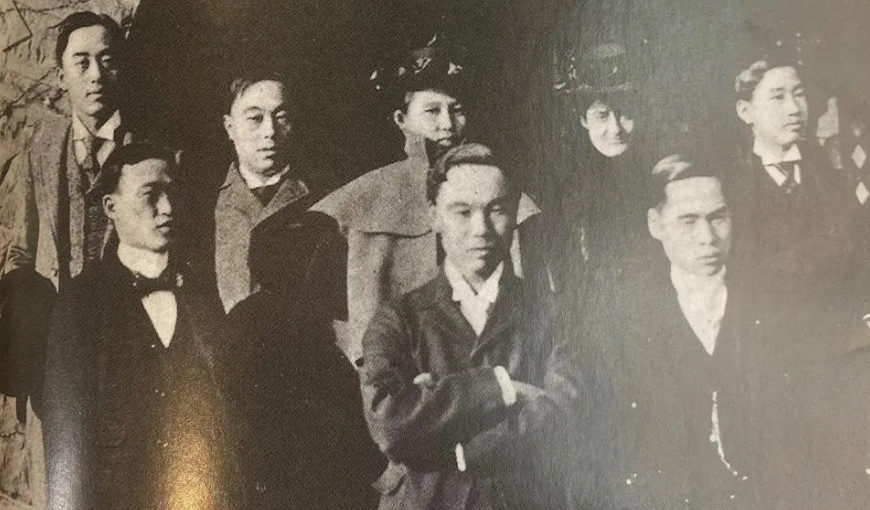
The year 1896 was a time when the Joseon Dynasty teetered on the brink of collapse. In the aftermath of the Empress Myeongseong’s assassination (the Eulmi Incident), seven students studying in Japan—including Im Byeong-gu, Lee Beom-su, Kim Heon-sik, Ahn Jeong-sik, and Eo Byeong-hyeon—decided to head to the United States to find a way to save their nation. The desperate, almost reckless record of them taking bank funds to afford the journey speaks volumes about the urgency they felt.
Intriguingly, they settled at Howard University, a historic Black college (HBCU). In the late 19th-century America, where racial discrimination was rampant, it was a space that shared the pain of marginalized people that opened its doors to these Korean strangers. They found a sanctuary in 'Clark Hall,' a moment that transcends mere education to represent a historical symbol of solidarity between minorities.
The First Record: Alice Fletcher’s 'Love Song'
The reason their existence could be resurrected 130 years later through BTS’s narrative lies in the 'wax cylinder' recordings left by anthropologist Alice C. Fletcher. On July 24, 1896, standing before a phonograph at Fletcher’s home, these young men sang "Arirang," the melody of their homeland. Fletcher titled this record "Love Song."
For these students, who worried about survival every day in a foreign land, Arirang was more than just a song. It was the only thread tethering them to their identity—a desperate 'confession of love' for the home they hoped to return to. These 11 tracks, sleeping deep within the Library of Congress, hold incomparable value as the first voice recordings of Koreans and the first audio record of Arirang.
BTS Connects the 'Red Thread of Fate'
Through the 2026 'ARIRANG' project, BTS has summoned these forgotten voices to the modern stage. In the trailer, the 'Red Thread' connecting the students of 1896 to the members of 2026 symbolizes the enduring cultural DNA of the Korean people across time and space.
While the youths of the past cautiously projected their voices into a phonograph, BTS today chants Arirang alongside tens of thousands of fans in stadiums worldwide. The medium has evolved from wax cylinders to digital streaming, but the underlying sentiment remains the same: the loneliness of being an outsider (Aliens), the endurance required to navigate the rough seas of the world (SWIM), and the narrative of finally returning home as one.
The Power of Voice: What is Your Love Song?
The highlight of this project is the question appearing in major cities across the globe: "What is your love song?" This is a multi-layered inquiry derived from the name Fletcher gave to Arirang 130 years ago. BTS asks: What is the 'love song' that keeps you alive, supports your roots, and the one you hum when times are hardest?
Admittedly, historical debates regarding the portrayal of Howard University (such as the racial composition of background figures) highlight the gap between artistic license and historical fact. However, the significance lies in the fact that, through the massive medium of BTS, these nameless students of the late Joseon era have once again walked into our lives.
Arirang Never Stops
The Arirang sung by those young men under the night sky of Washington 130 years ago may have been a mournful tune. But the Arirang that BTS will perform at Gwanghwamun Plaza in 2026 is a hymn of victory and hope. The song of the present exists because of the voices of the past, and that song will, in turn, be passed down as a 'love song' to someone in the future.
History does not merely reside in books. When combined with an artist's imagination, it becomes a vibrant, living present. Seven youths from 1896 and seven members from 2026—the conversation they share across 130 years is the most modern "Arirang" echoing in our ears today.
<저작권자 © 한韓문화타임즈, 무단 전재 및 재배포 금지>
 ‘기문국’ 망령의 부활인가… 남원문화원은 누구를 위한 역사를 가르치는가