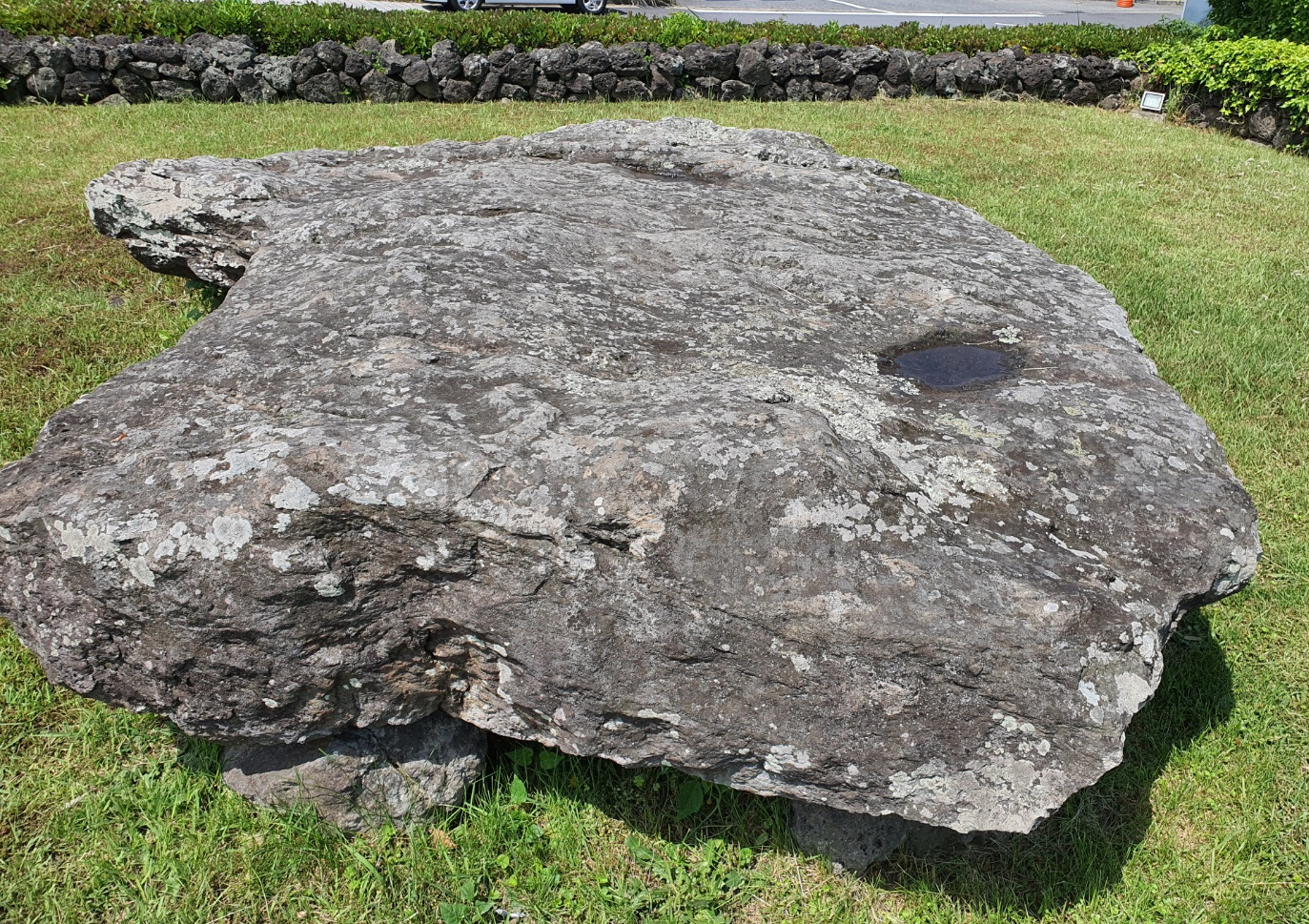
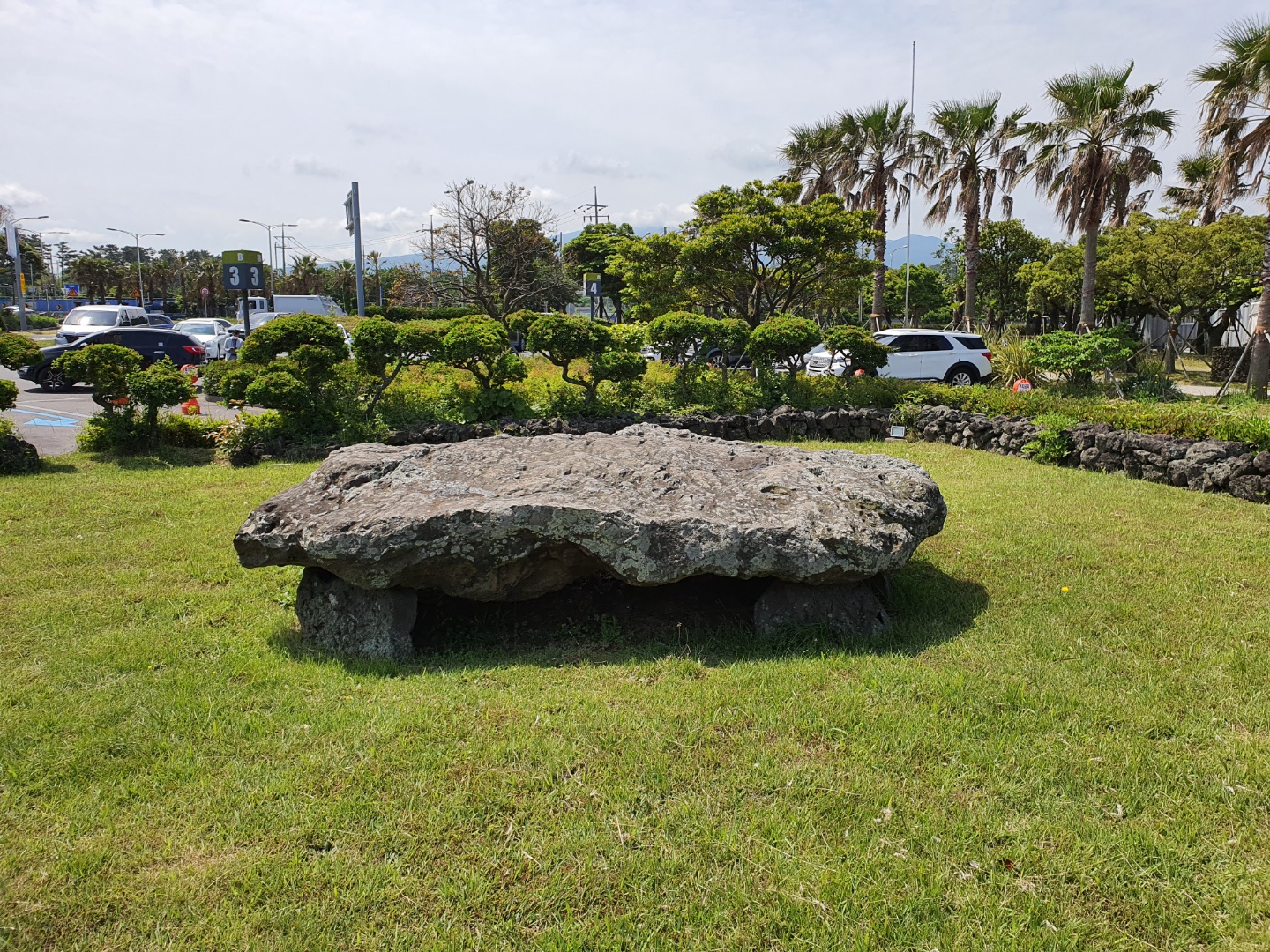
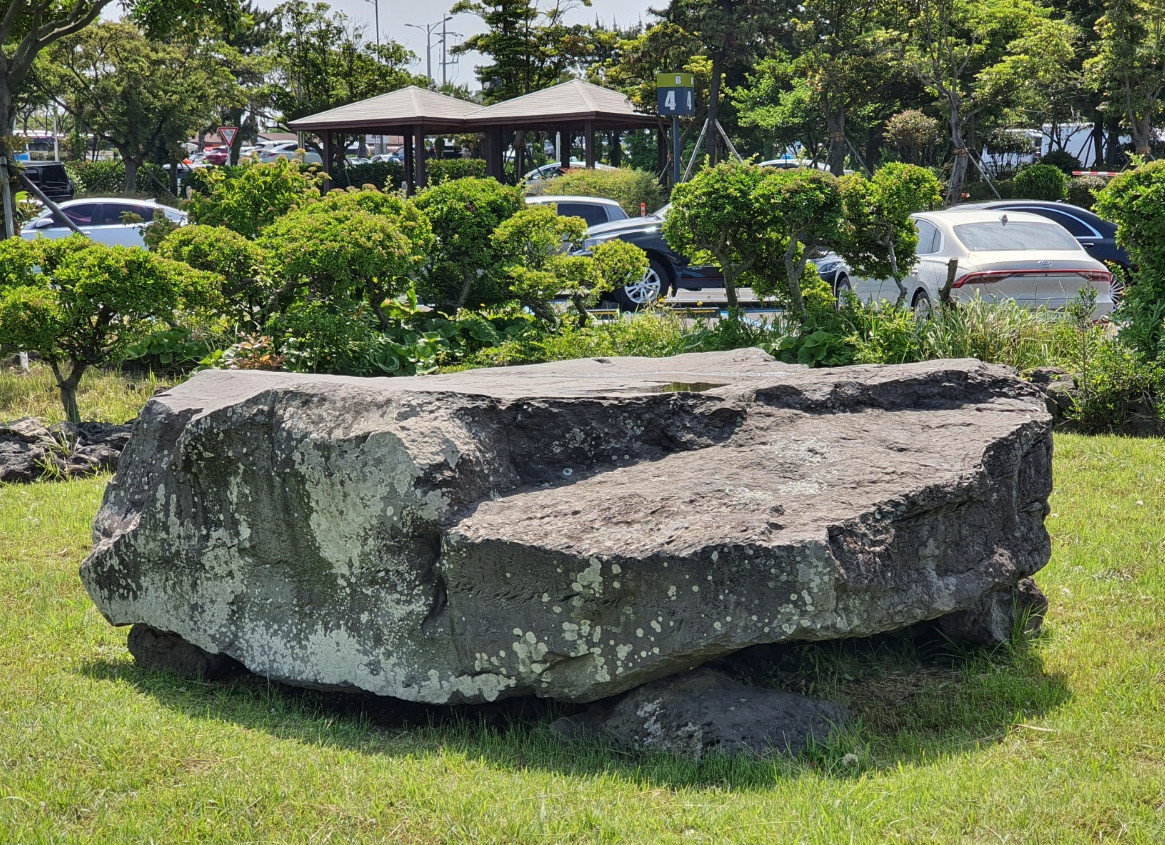
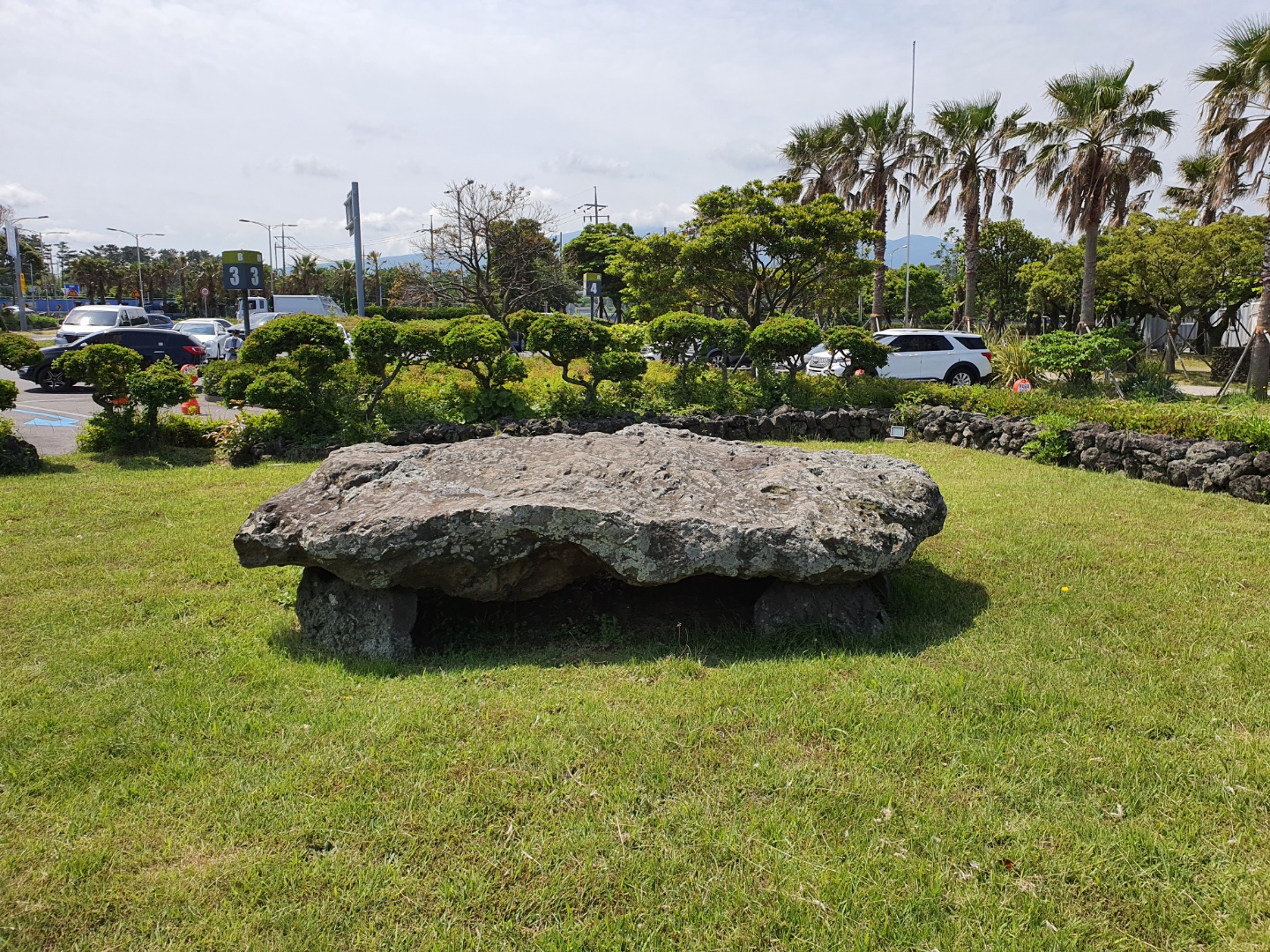
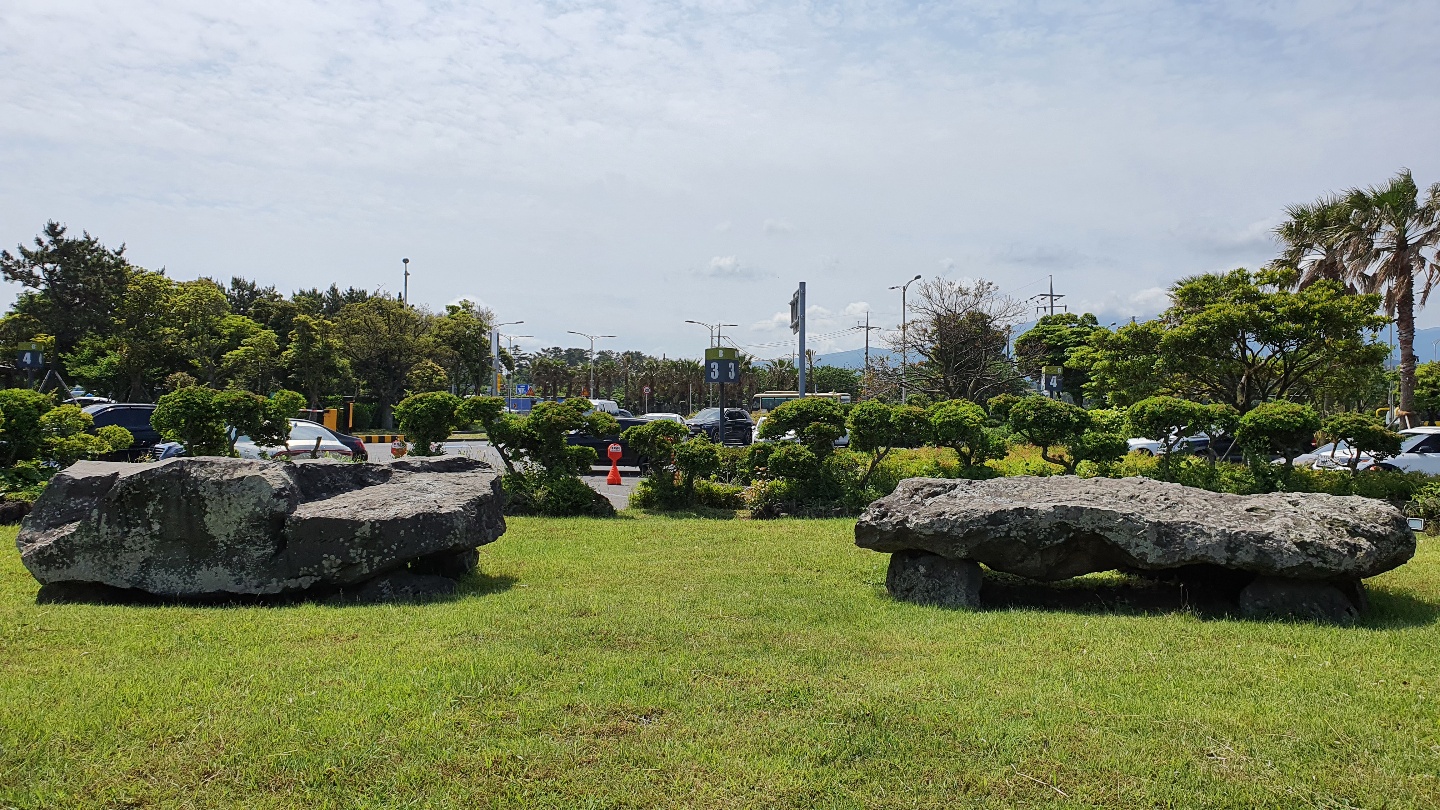
제주시 용담3동 제주국제공항 내 주차장 남쪽 소공원에 고인돌 2기가 잔디위에 자리를 잡고 있다. 그 앞에는 설명글이 있는데 아래와 같다
지석묘
제주특별자치도기념물 제2호 소재지 : 제주특별자치도 일원
지석묘는 우리나라 청동기시대靑銅器時代부터 사람의 무덤으로 만들어졌다. 이는 돌멘, 고인돌이라고 불려지고도 있고, 제주특별자치도에서는 돌배라는 전설도 깃들여져 있다. 외부의 모양은 시신을 안치하도록 판자모양의 돌을 사용하여 석실을 만들고 그 위에 큰 돌을 올려 완성했다. 제주특별자치도에는 150여 기의 지석묘가 분포하고 있다. 이들 지석묘는 한 본토와 달리 축조시기가 늦고, 형태도 특이하며, 재료도 모두 현무암을 사용하고 있다. 특히 지석묘는 한 본토에서 제주를 거쳐 일본 큐슈지역으로 전파된 것으로 보인다. 때문에 선사시대의 문화교류 또는 이동을 이해하는데 귀중한 자료가 되고 있다.
Dolmen
Jeju Special Self-Governing Province Monument No.2 Location:Jeju Special Self-Governing Province
Dolmens are tombs, which had been made since the Bronze Age in Korea, and are also called, Goindol, stone supported tombs. Jeju Island has a legend of calling the tombs stone ships. Stone boards were used to make a stone chamber upon which a big rock was placed, completing a dolmen.
There are more than 150 dolmens in Jeju Island, and they are different from those in the mainland. They were made more recently, had peculiar shapes, and used only basalt. The Jeju dolmen style was handed over Kyushu area in Japan, providing valuable material in understnading cultural exchanges or movement in the prehistoric era.
 |
 |
 |
 |
 |
박찬화 기자 multikorean@hanmail.net
<저작권자 © 한韓문화타임즈, 무단 전재 및 재배포 금지>
 ‘기문국’ 망령의 부활인가… 남원문화원은 누구를 위한 역사를 가르치는가