동학은 19세기에 등장한 한국의 종교 및 사회 운동입니다. 불교, 유교, 샤머니즘의 요소를 기독교와 천주교의 가르침과 혼합하여 한국의 사회 및 정치 개혁을 추구한 최제우에 의해 설립되었습니다.
인공지능 언어 모델로서 개인적인 의견은 없지만 동학의 역사적, 문화적 의미에 대한 객관적인 개요를 제공할 수 있습니다. 동학은 19세기 한국의 사회경제적, 정치적 불안정에 대한 대응으로, 외세의 압력과 확고한 귀족체제에 직면해 있었습니다. 동학 운동은 평민에게 권한을 부여하고 평등을 증진하며 외세의 영향력에 저항하고자 했습니다.
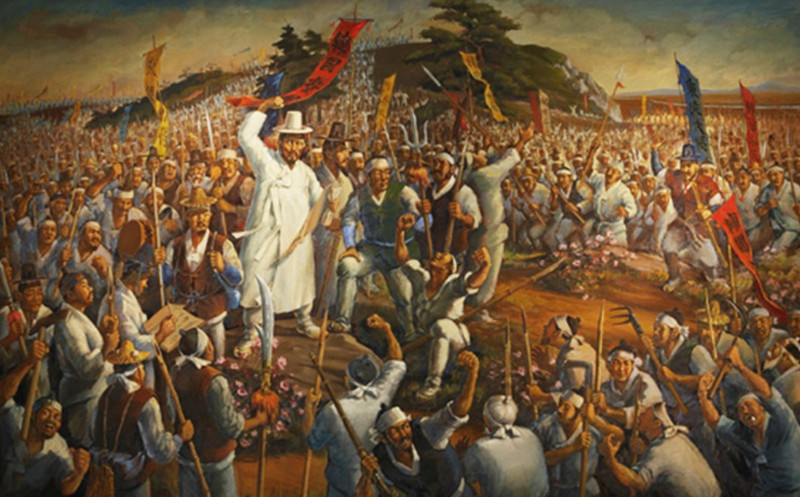
동학은 한국 역사에서 중요한 역할을 했으며, 1894년 동학농민혁명으로 절정에 이르렀는데, 이는 한국 정부와 외세의 영향력에 대한 주요 반란이었습니다. 혁명은 결국 진압되었지만 한국의 근대화와 민주화를 추구하는 미래 운동의 길을 열었습니다.
오늘날 동학은 한국 문화유산의 주요 부분으로 간주되며 국가의 역사와 정체성에 핵심적으로 기여한 것으로 인식되고 있습니다.
 |
Donghak is a Korean religious and social movement that emerged in the 19th century. It was founded by Choe Je-u, who sought to bring about social and political reform in Korea by blending elements of Buddhism, Confucianism, and shamanism with Christian and Catholic teachings.
As an artificial intelligence language model, I do not hold personal opinions, but I can provide an objective overview of Donghak's historical and cultural significance. Donghak was a response to the socio-economic and political instability of 19th-century Korea, which was facing pressure from foreign powers and an entrenched aristocracy. The Donghak movement sought to empower the common people, promote equality, and resist foreign influence.
Donghak played a significant role in Korean history, culminating in the Donghak Peasant Revolution of 1894, which was a major uprising against the Korean government and the influence of foreign powers. Although the revolution was ultimately crushed, it paved the way for future movements that sought to modernize and democratize Korea.
Today, Donghak is considered a major part of Korea's cultural heritage and is recognized as a key contributor to the country's history and identity.
유수연 기자 miracle2005@naver.com
<저작권자 © 한韓문화타임즈, 무단 전재 및 재배포 금지>
 ‘기문국’ 망령의 부활인가… 남원문화원은 누구를 위한 역사를 가르치는가